Future topic of digital sensors
Normal hardware sensors, as you probably know them, measure physical quantities directly. Digital sensors, or soft sensors, combine real measurement data mathematically and are thus physically non-existent. The target variable to be measured is simulated virtually.
Modelling
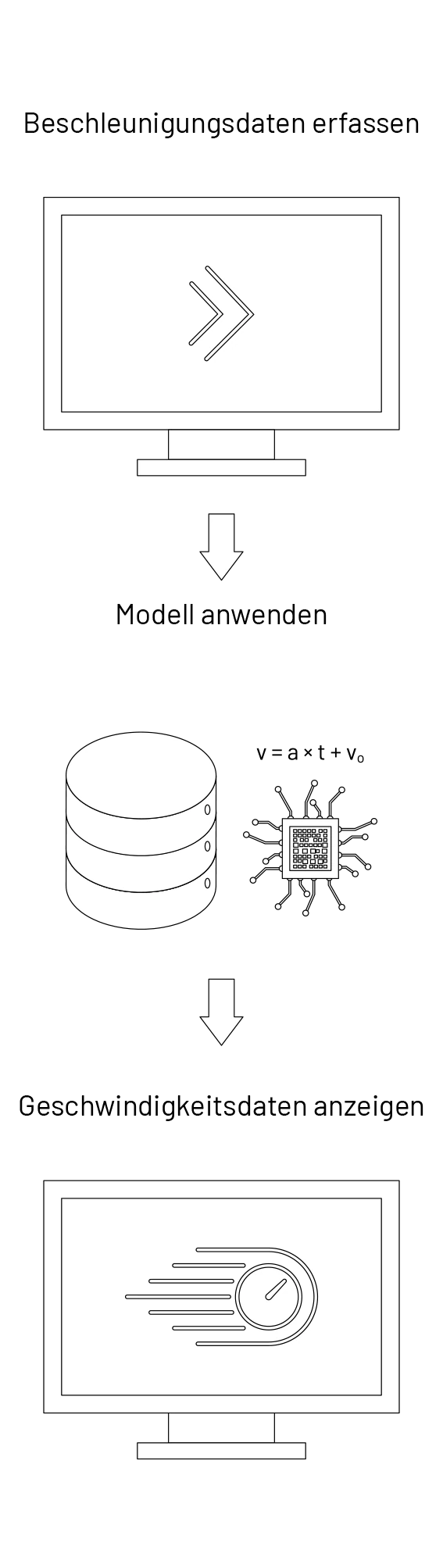
For example, with hardware sensors on your machine, you detect the acceleration of some components. If you also include time intervals, you can calculate speeds via physical formulas and relationships (Fig. 1). More complex relationships can best be achieved via artificial neural networks or multivariate methods image.
Application areas of digital sensors
Soft sensors can be used in extreme conditions, or when it is very expensive. technically difficult to determine the target value directly. Here we have listed some example applications for you:
- Industrial Internet-of-Things projects in the chemical industry
- Plant management in power plants
- Monitoring complex environments using multi-sensor technology
These virtual sensors also help monitor and calibrate normal hardware sensors to increase their reliability and accuracy.
Digital sensors with you
In your company, soft sensors help supplement process information by combining existing data. In this way, you create a basis for complex projects such as Digital Twins.
A better information basis also provides a more comprehensive picture of your actual situation. This opens up a reliable basis for decision-making in order to sustainably improve operational processes.